|
|
thailand : Bangkok and Four Other ASEAN Capitals Take the Lead to Become Green Cities to Fight Climate Change |
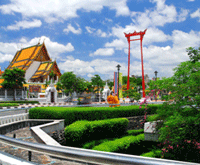 Bangkok and Four Other ASEAN Capitals Take the Lead to Become Green Cities to Fight Climate ChangeBangkok is joining hands with four other ASEAN capitals, namely Jakarta, Manila, and Vientiane, in tackling climate change and turning themselves green cities. Bangkok and Four Other ASEAN Capitals Take the Lead to Become Green Cities to Fight Climate ChangeBangkok is joining hands with four other ASEAN capitals, namely Jakarta, Manila, and Vientiane, in tackling climate change and turning themselves green cities.
Representatives from the four capitals adopted a founding declaration to establish the framework of collaboration for the “Cool ASEAN Green Capitals” initiative during their meeting in Bangkok on 2 November 2009. Several initial key activities were also discussed to promote the initiative by the ASEAN capitals and other major cities in the region. The initiative is planned to be launched officially in early 2010.
Mom Rajawongse Sukhumbhand Paribatra, the Bangkok Governor, who has been taking the lead in establishing this initiative, said that cities are centers where people and economic and social activities are concentrated. They are also the major sources of pollution contributing to climate change. However, they have the resources, intellectual knowledge and capacity to act and demonstrate leadership in the efforts to address climate change.
The Bangkok Governor and the Secretary-General of ASEAN, Dr. Surin Pitsuwan, will further consult with governors and mayors of ASEAN capitals and major cities on the initiative of Cool ASEAN, Green Capitals. Dr. Surin said that this initiative provides a platform for city-led, people-engaged actions on climate change and green city infrastructure, amenities and services, thereby contributing to ASEAN’s efforts to cool the mounting global warming effects of climate change. He also noted that about 50 percent of the over 583 million people of ASEAN now live in cities and urban areas. The figure is projected to increase to 75 percent by the year 2050.
Emphasizing that climate change is not an end in itself, Dr. Surin said that climate change provides the means to engage all parties in a holistic manner to meet the everyday needs of citizens through greener buildings and infrastructure, more green spaces, more efficient mass transportation, reduced waste and wastewater and better management, clean water supply, efficient use of energy, and cleaner fuels, including renewable energy. Actions on all these fronts contribute to cleaner air, water, and land, which at the same time reduce the carbon footprint.
The ASEAN Secretary-General also explained that ASEAN’s main goal is to be a people-centered institution, bringing the benefits of regional cooperation to the people. The ASEAN leaders have issued several declarations stressing the serious impact of climate change on the region and ASEAN’s commitment to proactively engage all levels of society to address this looming threat to survival, livelihood, and development.
The Cool ASEAN, Green Capitals initiative has also received the support of the World Bank in addressing climate change. The World Bank said that it could bring in its wealth of experience in mobilizing concessionary funds, promoting technology transfer, and designing and implementing project activities, particularly in developing countries, to support the regional activities of the cities in this initiative.
Like other large cities that have experienced rapid growth, Bangkok has faced many environmental problems. Efforts are being made to develop it into a more livable city.
|
|
| |